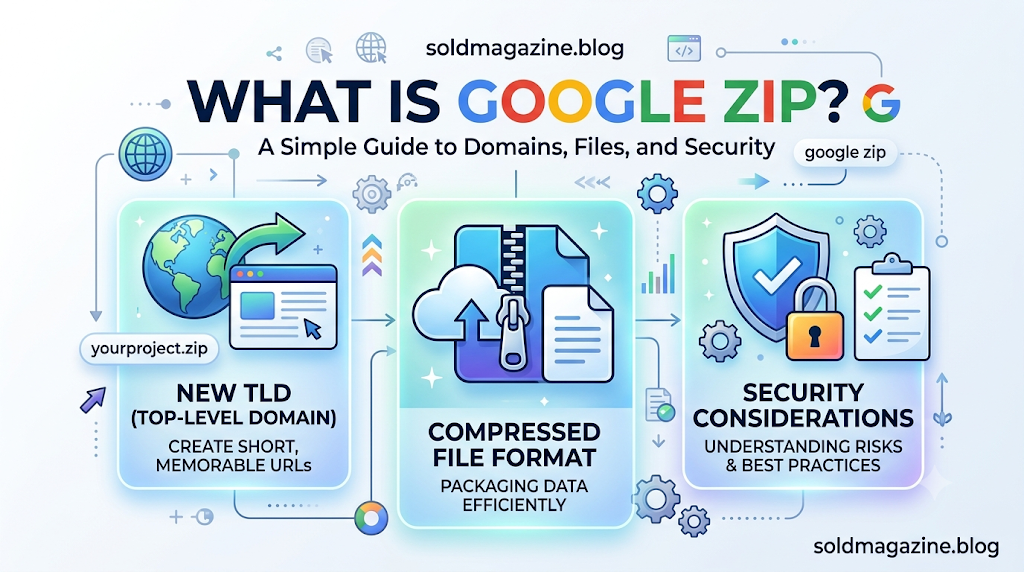
Have you ever wondered what people mean when they search for Google Zip? It sounds simple, but it actually means a few different things. You might be looking for a google zip code to find your current location on a map. Or, you could be trying to open a compressed folder using an app from the Google Workspace Marketplace. Lately, it has also become famous as a new kind of website address.
Understanding these different tools helps you navigate the digital world safely. In this article, we will break down every single meaning of this term. We will look at how it helps you sort your online files, how it finds your neighborhood, and how it protects your online safety. Everything is written in plain, simple English so anyone can easily follow along!
Quick Reference Guide to Google Zip Features
| Feature Type | Primary Purpose | How to Access or Use It | Key Benefit |
| Google Maps Location | Finds your local google zip code | Type “my zip code” into Google Search | Helps with local shipping and directions |
| Files by Google App | Compresses and unzips folders | Download from the Google Play Store | Saves phone storage space |
| ZIP Extractor Extension | Opens archives in the cloud | Install via Google Workspace Marketplace | Works directly inside Google Drive |
| The .zip Web Domain | A new type of website address | Register via Google Registry partners | Creates short, memorable web links |
Finding Your Location with a Google Zip Code
The most common reason people look up this term is to find their local postal zone. When you type google zip code into a search bar, the system uses your internet connection to guess where you are standing. It then displays the five-digit or six-digit number for your area right at the top of your screen.
This tool is incredibly helpful when you are filling out online shopping forms. It is also great when you move to a brand-new city and cannot remember your new mail numbers yet. Google works with global postal databases to make sure these numbers stay updated every single day.
How Files by Google Helps You Save Storage Space
If you use an Android smartphone, you might know about an official app called Files by Google. This helpful application comes pre-installed on many devices to keep your storage neat and tidy. One of its best features is the ability to handle a google zip folder without needing extra software.
When your phone runs out of room for photos or documents, you can group them together. The app squeezes these files into a tiny package that takes up much less space. This makes it much easier to email large folders to your friends or teachers without crashing your app.
Unzipping Your Hidden Media Folders in Seconds
Opening a compressed file on a mobile phone used to be very frustrating. Now, the official Files app makes the entire process take just two quick taps. When you download a compressed archive from the internet, you simply locate it inside the app interface.
Tap on the file, and a neat window pops up to show you exactly what is hiding inside. You can choose to extract the files into your regular storage folders immediately. The app even offers a checkbox to delete the original compressed file so it does not clutter your phone.
Exploring the ZIP Extractor for Google Drive Users
For people who do most of their work on laptops or Chromebooks, cloud storage is essential. If you receive a compressed folder in your Gmail inbox, you might not want to download it to your computer. That is where a handy cloud tool called ZIP Extractor comes into play.
This browser-based app integrates directly into your cloud drive space. It allows you to peer inside compressed packages without downloading a single byte to your physical hard drive. It runs smoothly inside your web browser and keeps your personal data hidden away from outside servers.
The Big Launch of the New .zip Top Level Domain
In May of 2023, the word google zip took on a whole new meaning in the tech industry. The company announced they were opening up a brand-new website ending. Just like websites can end in .com or .org, people can now buy domain names that end in .zip.
The tech team at Google marketed this new option as a fun way to share things quickly. They wanted developers and creators to use these short links for tech projects and fast data sharing. However, using a file extension name for a website address surprised many internet experts.
Why Security Experts Raised Red Flags About Web Domains
Shortly after these new website addresses became available to the public, safety researchers noticed some issues. The main problem is that a web address ending in .zip looks identical to a computer file format. This creates a bit of confusion for both everyday users and automated systems.
For example, if someone types “family-photos.zip” in a text message, your computer might turn that text into a clickable link. Instead of opening a folder on your own hard disk, clicking it could open a web browser. This unexpected behavior opened up new pathways for clever online tricksters.
Spotting Phishing Scams Hidden Behind Clever Web Links
Bad actors on the internet are always looking for fresh ways to trick people into giving away passwords. With these new web extensions, an attacker could create a fake login page that mimics a regular cloud storage site. They might name their website something like “secure-download.zip” to make it look official.
When an unsuspecting user clicks the link, they think they are opening a safe file. Instead, they land on a website that asks them to type in their email and password. This is why it is more important than ever to look closely at your address bar before typing any private info.
How Google Protects You with Strict Security Rules
The teams at Google knew that releasing this new web extension would require extra safety nets. Because of this, they enforced a strict rule called mandatory HTTPS for every single site using this ending. This means that data sent to these websites is always safely scrambled and encrypted.
If an independent creator buys one of these domains, their site will not open in a browser unless it has an active security certificate. This prevents basic hackers from setting up completely invisible operations. It also ensures that your connection to the site cannot be easily hijacked by someone on public Wi-Fi.
Real Statistics on the Safety of These New Web Extensions
While the early security warnings sounded very scary, the actual data tells a much more comforting story. Millions of people have registered these new web names over the last few years. According to internet tracking studies, only a tiny fraction of these sites are actually used for bad behavior.
In fact, the rate of malicious registrations for this specific ending sits at about 0.20%. That is actually slightly lower than the global internet average of 0.22%! This shows that while the security risk is real, regular internet guardrails are doing an excellent job of keeping things peaceful.
Best Tips for Staying Safe While Browsing the Modern Web
You do not need to be a computer wizard to stay perfectly safe online. The best habit you can build is to slow down and read your browser address bar carefully. Before you type a password into any site, look at the very end of the name to see where you are.
Pro Tip: If an email from a stranger tells you to click a link to download an urgent file, do not click it. Instead, go directly to the official website of the company or service to find your files safely.
Summary and Final Thoughts on the Google Zip Universe
Whether you are looking for a local google zip code, shrinking your phone photos, or exploring new web links, the google zip ecosystem has a lot to offer. These smart tools make our digital lives faster, smaller, and much easier to organize.
As the internet continues to grow and change, staying informed is your absolute best defense. By understanding how these file systems and web domains work, you can enjoy all the convenience of modern technology without any of the worry. Keep exploring, stay curious, and always double-check your links!
Frequently Asked Questions
How do I find my exact google zip code online?
You can find your local code by opening your browser and typing “what is my zip code” into the search bar. If your device location services are turned on, the system will instantly show your local area numbers at the top of the search page.
Is the Files by Google app free to download?
Yes! The app is completely free to download and use for all Android device owners. It contains no hidden fees or forced subscriptions, making it a wonderful tool for cleaning out junk files and managing compressed data folders.
What is the main difference between a .zip file and a .zip website?
A file is a compressed folder that sits locally on your phone or computer drive to save physical storage space. A website is a live page hosted on the internet that you visit using a web browser like Chrome or Safari.
Why did Google create a web address ending in .zip?
They introduced this extension to give internet users more creative choices for custom web addresses. It was designed to help tech companies, software developers, and web creators build memorable short links for sharing content.
Can a compressed folder damage my mobile phone?
A compressed folder itself is completely harmless. However, if you extract files from an unknown source, they could contain harmful software. Only unzip folders that come from trusted friends, official teachers, or verified business websites.
Do I need special software to open a google zip folder on my laptop?
No, you do not need to buy expensive programs. Modern computer software like Windows and macOS have built-in tools that can open these folders automatically. For cloud files, you can use free tools like the ZIP Extractor extension.