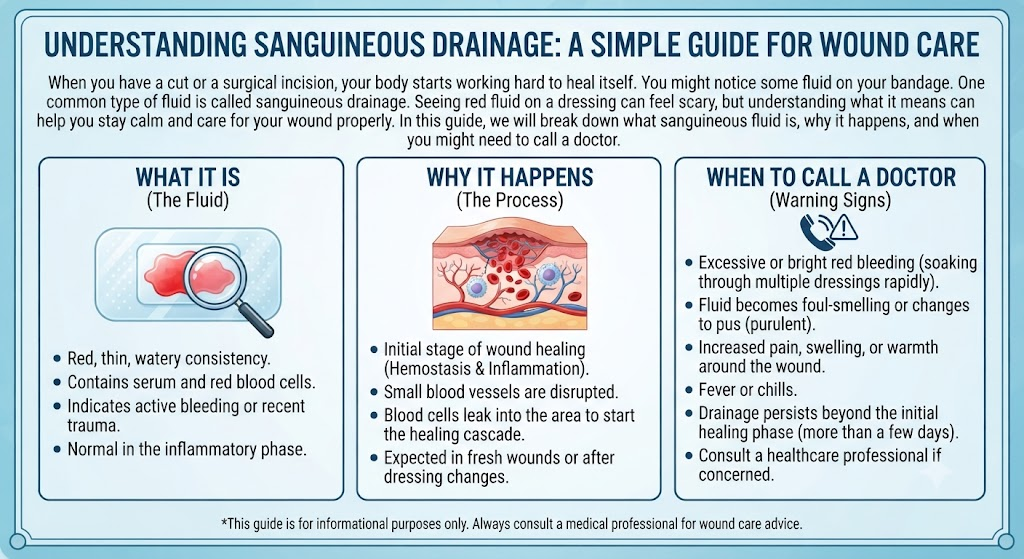
When you have a cut or a surgical incision, your body starts working hard to heal itself. You might notice some fluid on your bandage. One common type of fluid is called Sanguineous drainage. Seeing red fluid on a dressing can feel scary, but understanding what it means can help you stay calm and care for your wound properly. In this guide, we will break down what sanguineous fluid is, why it happens, and when you might need to call a doctor.
What Does Sanguineous Mean?
In simple terms, sanguineous is a medical word that means “containing blood” or “related to blood.” When doctors or nurses talk about sanguineous drainage, they are describing fresh red blood leaking from a wound. It is the body’s natural response right after an injury occurs. Because it is mostly made of blood, it looks bright red and has a thin, watery texture. It is very common to see this type of sanguineous discharge immediately after surgery or a fresh cut.
The Role of Sanguineous Fluid in Healing
Your body is amazing at fixing itself. During the first stage of healing, called the inflammatory phase, your blood vessels might leak a little bit. This sanguineous fluid helps clear away debris and delivers important cells to the injury site. It is part of the body’s way of cleaning the area so that new tissue can grow. Most of the time, this bright red sanguineous fluid stops after a few hours or a couple of days as the blood begins to clot and the wound starts to seal.
Sanguineous vs. Serosanguineous: What’s the Difference?
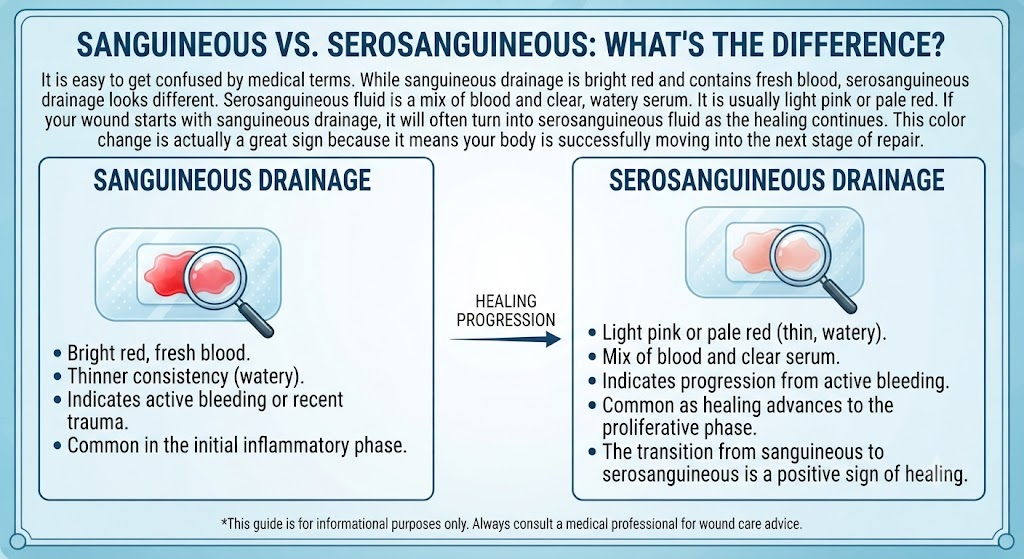
It is easy to get confused by medical terms. While sanguineous drainage is bright red and contains fresh blood, serosanguineous drainage looks different. Serosanguineous fluid is a mix of blood and clear, watery serum. It is usually light pink or pale red. If your wound starts with sanguineous drainage, it will often turn into serosanguineous fluid as the healing continues. This color change is actually a great sign because it means your body is successfully moving into the next stage of repair.
Why Color Matters in Wound Exudate
The color of your wound drainage tells a story. Sanguineous drainage should be a vibrant, bright red. If the fluid turns a dark, rusty, or maroon color, it might mean the blood is older and has been sitting in the wound for a while. However, if you see thick, milky, or foul-smelling fluid, that is not sanguineous drainage. That could be a sign of infection. Always keep an eye on the color and smell, as these simple signs give you the best information about how your wound is doing.
Managing Your Wound at Home
If you have a minor wound with sanguineous drainage, you can usually manage it at home. Make sure to keep the area clean and follow the advice of your healthcare provider. Change your bandages regularly so that old sanguineous fluid does not sit on the skin and cause irritation. If the bandage gets soaked, it is time to change it. Keeping the wound clean and dry helps prevent bacteria from growing and makes it much easier for your body to complete the healing process.
When to Worry About Sanguineous Drainage
While some sanguineous discharge is normal, there are times to be extra careful. If the blood flow is very heavy, won’t stop, or if you see bright red blood spurting out, seek medical help immediately. Also, if you notice the sanguineous output increasing instead of decreasing after a few days, it might be a sign of a problem like a reopened wound or a reaction to medication. Trust your gut; if something feels wrong or the bleeding does not slow down, it is always better to talk to a professional.
The Importance of Proper Documentation
If you are caring for someone else, it is helpful to keep a simple record of the drainage. Note how much sanguineous fluid you see and if the amount is changing. For example, did you change the bandage twice today because of sanguineous leakage? This information is very helpful for doctors. Good documentation ensures that if there is a complication, your medical team will have a clear history of how the wound has been behaving since the injury first happened.
Risks of Poorly Managed Wound Drainage
Ignoring heavy or persistent sanguineous drainage can lead to complications. If a wound stays too wet, the skin around it can become soft and damaged, which we call maceration. Also, if the sanguineous flow is constant, it may delay the natural healing stages. By staying on top of your dressing changes and monitoring the amount of sanguineous fluid, you protect the wound environment. This simple habit promotes faster recovery and helps your body return to its normal, healthy state much sooner.
Understanding Your Personal Health Factors
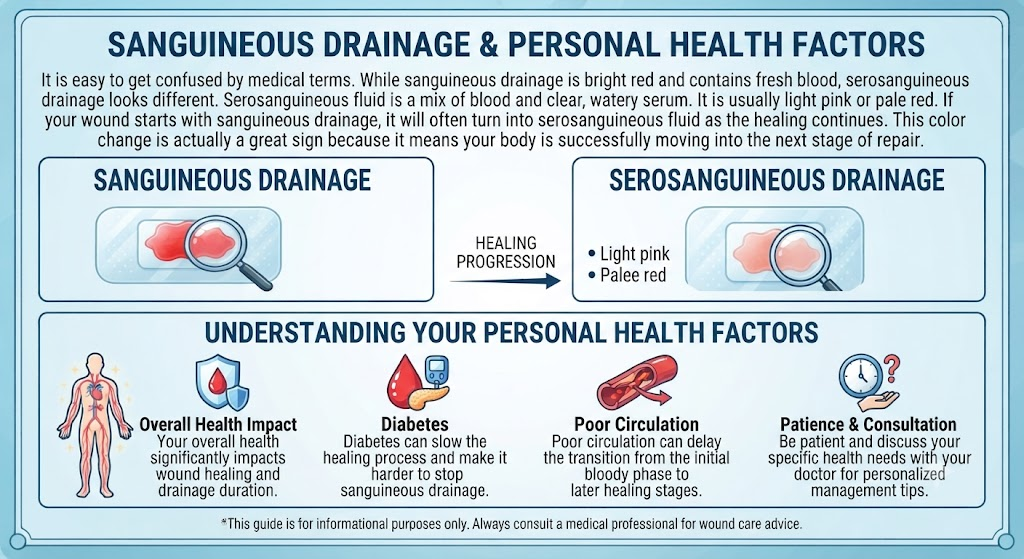
Your overall health plays a big part in how your wounds heal. Conditions like diabetes or poor circulation can make it harder for your body to stop the sanguineous drainage. If you have these health concerns, your body might take a little longer to transition from that initial bloody phase to the later stages of healing. Be patient with yourself and be sure to discuss your specific health needs with your doctor. They can give you personalized tips for managing sanguineous drainage safely.
Conclusion
Healing takes time, and seeing sanguineous drainage is just one small part of that journey. By understanding what is normal, you can feel much more confident in your ability to care for a cut or surgery site. Remember to keep the area clean, monitor the color and amount of fluid, and reach out to your doctor if you ever have concerns. You are doing a great job by paying close attention to your body’s needs. Your careful care is the best medicine!
Detailed Wound Drainage Comparison
| Drainage Type | Color | Consistency | What It Means |
| Sanguineous | Bright Red | Thin/Watery | Fresh blood from a new injury or surgery. |
| Serosanguineous | Light Pink | Thin/Watery | A mix of blood and serum; common in healing. |
| Serous | Clear/Pale Yellow | Thin/Watery | Normal plasma; healthy healing sign. |
| Purulent | Yellow/Green/Tan | Thick/Milky | Possible sign of infection; needs medical attention. |
Frequently Asked Questions
1. Is it normal to have sanguineous drainage?
Yes, it is very normal to have sanguineous drainage right after a surgery or a fresh cut. It is just your body’s way of clearing the site.
2. How long does sanguineous fluid usually last?
It should start to decrease after the first few hours or days. If the sanguineous drainage continues for a long time, check with a doctor.
3. What does it mean if my drainage turns pink?
That is actually a great sign! It means the fluid is turning into serosanguineous drainage, which is a normal part of the healing process.
4. Can I get an infection if I have sanguineous drainage?
Sanguineous fluid itself is not an infection. However, if the fluid becomes thick, smelly, or changes color to green or yellow, see a doctor right away.
5. Should I be worried if my dressing is covered in blood?
A small amount is okay, but if your dressing is completely soaked in sanguineous fluid, you should change it and monitor how fast it refills.
6. What should I do if the bleeding does not stop?
If you see heavy bleeding or if the sanguineous flow does not stop after applying firm pressure, seek emergency medical help immediately.